
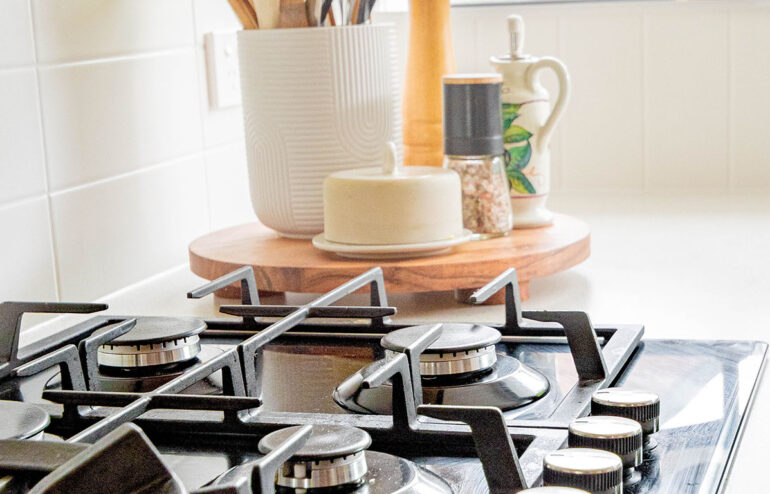
Replacing Your Gas Cooktop? Here’s Where to Start
Replacing a gas cooktop can seem pretty straightforward — find a new one you like, buy it and have it installed.
But there’s one important step you should take before purchasing your new cooktop:
Make sure you know what size and type will actually fit your existing kitchen.
Cooktops aren’t necessarily a simple “standard size fits all” situation. Even if your new cooktop looks similar to your existing one, the dimensions of the appliance and the cut-out in your benchtop can be different.
Here’s what you need to know before you buy.
Step 1: Measure Your Existing Cooktop
The first thing to establish is the size of your current cooktop.
You’ll want to measure:
-
- Overall width of the cooktop
- Overall depth
- The cut-out width in the benchtop
- The cut-out depth
- The available space around the cooktop
The most important measurements when replacing a built-in cooktop are generally the cut-out dimensions, rather than simply the overall size of the appliance.
For example, two cooktops may both be marketed as “60cm cooktops”, but that doesn’t necessarily mean they have identical cut-out requirements.
Don’t just measure the glass or stainless-steel top
This is a common mistake.
The overall dimensions of the cooktop and the dimensions of the hole cut into your benchtop are two different measurements.
Before ordering a replacement, look at the manufacturer’s installation specifications for the particular model you’re considering.
Step 2: Check the Manufacturer’s Cut-Out Dimensions
Once you’ve found a cooktop you like, look at the manufacturer’s specifications.
You’ll usually find measurements for:
Overall appliance dimensions
The physical size of the cooktop.
Cut-out dimensions
The size of the opening required in the benchtop.
Minimum clearances
The required distance from walls, splashbacks, overhead cupboards and other surfaces.
Gas connection requirements
Information about where the gas connection needs to be located.
These specifications are more important than simply choosing a cooktop because it is advertised as 60cm, 75cm or 90cm.
Step 3: Consider Whether You’re Changing Cooktop Size
If you’re replacing your existing cooktop with one that’s the same size, the installation may be relatively straightforward.
But what happens if you want to go bigger?
For example, you might currently have a 60cm cooktop but want to upgrade to a 75cm or 90cm model.
This may involve modifying the benchtop cut-out.
The opposite situation can be more complicated.
Making a hole smaller isn’t as simple as making it larger.
If you’re downsizing your cooktop, you’ll need to consider how the existing cut-out will be filled or modified. Depending on the benchtop material and the new appliance, this may require additional work from a kitchen or benchtop professional.
That’s why it’s worth checking your measurements before you buy.
Step 4: Check Your Gas Supply
If you’re replacing an existing gas cooktop with another gas cooktop, the existing gas connection may be suitable — but it still needs to be assessed.
The new appliance may have different requirements, and the installation needs to be completed correctly.
If you’re changing from electric to gas, that’s a different situation altogether.
You’ll need to determine how a gas supply can be brought to the kitchen and what pipework and connections are required.
A licensed gas fitter can assess this before you purchase the appliance.
Step 5: Check the Cooktop Type Before Buying
Not all cooktops are the same.
If you’re specifically replacing a gas cooktop, make sure the new appliance is compatible with your property’s gas supply.
For example, some appliances are configured for natural gas while others may be set up for LPG or require conversion – easy enough for a licence gas fitter to undertake.
Don’t assume that any gas cooktop will automatically work with your existing gas supply.
Check the manufacturer’s specifications and have the installation requirements confirmed before purchasing.
Step 6: Think About Your Kitchen Layout
This is particularly important if you’re renovating.
Consider:
-
- Where the cooktop will be positioned
- Nearby walls and splashbacks
- Overhead cupboards
- Rangehood location
- Benchtop material
- Sink and preparation areas
- Gas connection location
- Accessibility for future servicing
If you’re changing the location of the cooktop altogether, you’ll also need to consider the new gas pipework and the benchtop modification.
What Size Gas Cooktop Should You Buy?
There’s no single “correct” size for every kitchen.
Common cooktop widths include approximately:
-
- 60cm — common for smaller kitchens and many standard installations
- 75cm — useful if you want more cooking space
- 90cm — popular for larger kitchens and households that regularly use multiple burners
But the size you should purchase isn’t necessarily the same as the size you currently have.
The key is to choose a model that fits your available space and, most importantly, has installation and cut-out dimensions compatible with your benchtop.
If you’re unsure, measure first and buy second.
Should You Buy the Cooktop Before Calling a Gas Fitter?
You can, but it’s often better to get advice before making the purchase, particularly if you’re changing the size, location or type of cooktop.
Having the model number or manufacturer’s installation specifications available allows your gas fitter to determine what will be involved.
This can help prevent the frustrating situation of buying a beautiful new cooktop only to discover that:
❌ The cut-out isn’t the right size
❌ The gas connection isn’t suitable
❌ There isn’t enough clearance
❌ Additional pipework is required
❌ The benchtop needs modification
A few checks before purchasing can save you time and potentially additional costs.
What Does a Gas Cooktop Replacement Involve?
Once you’ve chosen a suitable appliance, the installation process generally involves:
-
- Assessing the existing installation
- Confirming the new cooktop specifications
- Checking the gas supply and connection
- Removing the existing appliance
- Preparing or modifying the benchtop if required
- Installing the new cooktop
- Connecting the gas supply
- Testing the installation
- Checking the appliance is operating correctly
Gas appliance work should be carried out by a licensed gas fitter.
Replacing Your Cooktop? Start With the Measurements.
The biggest mistake you can make is buying a new cooktop based solely on how it looks or the fact that it’s advertised as a “60cm” or “90cm” model.
Measure your existing cut-out, check the new manufacturer’s specifications and consider your gas supply before you purchase.
And if you’re unsure, get professional advice first.
At Gas Services QLD, we provide gas fitting and gas appliance services throughout Noosa, the Sunshine Coast and Gympie.
If you’re planning to replace your gas cooktop and aren’t sure what you need, get in touch with our team before you buy.
Need a gas cooktop replaced or installed? Contact Gas Services QLD to discuss your requirements.