


[vc_row][vc_column][vc_column_text]
If your hot water suddenly turns cold, your cooktop won’t ignite, or your gas heater isn’t working properly, the first thought is usually: “Are my gas bottles empty?”
But sometimes the issue isn’t the cylinder at all — it could be your gas regulator or the appliance itself.
Here’s how to tell the difference and what to do next.
Step 1: Check for the Most Common Signs of Empty Gas Cylinders
Empty LPG cylinders are the most common cause of gas supply issues. Signs include:
-
-
No hot water at all
-
Cooktop burners won’t light
-
Gas heater not starting
-
All gas appliances stop working at the same time
-
Frost forming on the cylinder (when nearly empty)
-
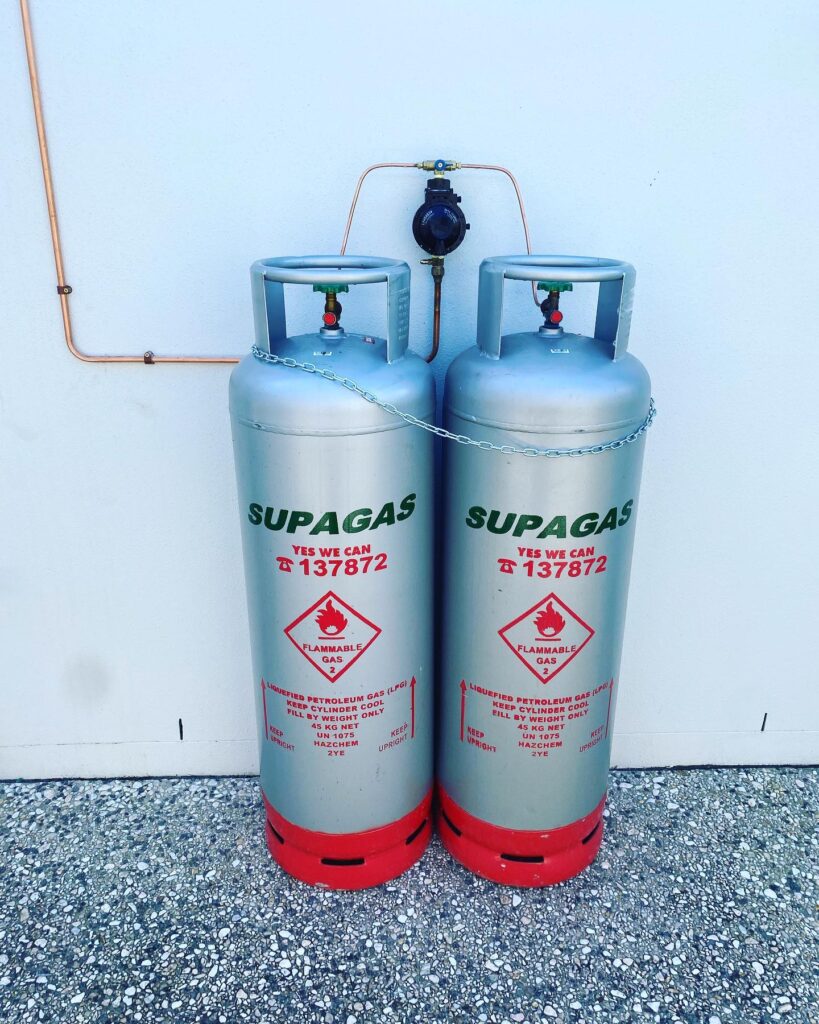
If you have two cylinders connected, check:
-
-
Has the changeover regulator switched to the second bottle?
-
Does the second bottle feel full when gently rocked?
-
If both cylinders are empty, you’ll need a refill or swap.
If one cylinder is full but nothing is working — the issue may not be the bottle.
Step 2: Signs the Gas Regulator May Be Faulty
Your gas regulator controls pressure from the cylinder to your appliances. If it fails, you may experience:
-
-
Weak or small burner flames
-
Yellow or uneven flames
-
Appliances cutting in and out
-
Gas smell near the regulator
-
Hissing sounds
-
Regulator feels loose or damaged
-
System not switching properly between two bottles
-
Regulators can wear out over time, especially in coastal areas like the Sunshine Coast where salt air causes corrosion.
If your bottles are full but appliances aren’t performing properly, a faulty regulator is often the cause.
Step 3: Signs the Appliance Itself May Be the Problem
If only one appliance is having trouble (for example, your hot water system works but your cooktop doesn’t), this usually indicates an appliance issue rather than a cylinder or regulator problem.
Common appliance faults include:
-
-
Blocked burners
-
Faulty ignition
-
Worn thermocouple
-
Internal component failure
-
Lack of servicing
-
If multiple appliances aren’t working, the issue is more likely supply-related (cylinder or regulator).
Simple Home Checks You Can Do
Before calling a gas fitter, you can:
✔ Check if the cylinder valve is fully open
✔ Look at the regulator indicator
✔ Try switching to the second bottle (if you have one)
✔ Confirm whether other gas appliances are working
✔ Check for obvious damage to hoses or fittings
Important:
If you smell gas, hear hissing, or suspect a leak — turn off the cylinder immediately and call a licensed gas fitter.
When to Call a Licensed Gas Fitter
You should contact a professional if:
-
-
You’ve replaced or switched cylinders and still have no gas
-
The regulator appears faulty
-
Appliances are underperforming
-
There is any sign of a gas leak
-
You’re unsure and want peace of mind
-
At Gas Services QLD, we diagnose cylinder supply issues, regulator faults, and appliance problems safely and efficiently across the Sunshine Coast and Gympie region.
Don’t Guess With Gas
Gas systems are designed to be safe — but only when installed and maintained correctly.
If you’re unsure whether your gas bottles are empty or something more serious is going on, it’s always better to have it checked properly.
A quick inspection can save you from unnecessary bottle refills, appliance damage, or potential safety risks.
[/vc_column_text][/vc_column][/vc_row][vc_row full_width=”stretch_row” row_bg_overlay=”#018bcc” css=”.vc_custom_1626239569320{padding-top: 20px !important;padding-bottom: 20px !important;}”][vc_column width=”2/3″][vc_custom_heading text=”GET IN TOUCH TO DISCUSS YOUR NEXT GAS FITTING PROJECT!” font_container=”tag:h2|text_align:center|color:%23ffffff” use_theme_fonts=”yes” tm_letter_spacing=”0.05em”][/vc_column][vc_column width=”1/3″][vc_btn title=”CONTACT NOW” color=”warning” align=”center” el_class=”freeQuote” css=”.vc_custom_1626239474223{margin-top: 20px !important;padding-top: 20px !important;}”][/vc_column][/vc_row]